

Throughout your child’s life, there may be times when they have difficulty learning a new concept. While this is a perfectly normal experience, if you notice that your child is struggling or not thriving in a school setting, it may be time to schedule a psychological assessment. Early assessment and detection can help you determine the correct course of action, giving your child the skills and confidence to cope with and compensate for their learning disability.
What Is a Learning Disability?
A learning disability is a neurological difference that affects how a person reads, writes, speaks or handles specific tasks like math problems. The presence of one or more learning disabilities isn’t a sign of your child’s intelligence — it simply means their brain works differently. A learning disability may not be discovered until after your child begins school and faces a learning challenge that persists over time.
Some of the most common types of early childhood learning disorders include:
- Nonverbal learning disorders: Individuals with this disorder can communicate effectively but have difficulty understanding facial expressions, may have poor coordination and can struggle with multi-step directions.
- Dyslexia: This disorder causes difficulties with accurate and fluent reading. Children with dyslexia may have a hard time with spelling, sentence comprehension and recognizing familiar words.
- Central auditory processing disorder: People with this disorder have trouble understanding and remembering language-related tasks, which can make it difficult to explain things, understand jokes and follow directions. They may also confuse words and become easily distracted.
- Dysgraphia: This disorder causes issues with the physical act of writing. An individual may have trouble writing letters of the alphabet, writing within a defined space, and transcribing their thoughts.
- Apraxia of speech: With this disorder, a person has trouble communicating because the brain has issues planning and executing the muscle movements needed for speech.
- Dyscalculia: This disorder makes it difficult to understand arithmetic concepts and perform tasks such as addition, multiplication and measuring.
What Are the Signs of a Learning Disability in Children?
At times, all children have trouble with academic skills. A learning disorder may be indicated if these symptoms last for at least six months without improvement. If your child is experiencing persistent difficulties with the following skills, it may signal a learning disorder.
Reading
This skill requires understanding speech, and reading-based learning disorders often stem from issues with understanding a spoken word as a mix of distinct sounds. This can make it hard to connect how letters represent sounds and form words. Even with basic reading skills, your child may still show:
- A reading pace below their grade level.
- Poor reading comprehension.
- Difficulty recalling what they’ve read.
- Trouble making connections based on their reading.
- Issues with spelling.
Writing
This complex skill involves vision, movement and information processing. A writing-based childhood learning disorder may manifest as:
- Handwriting that is slow and requires significant effort.
- Difficulty recalling how to form letters, copy shapes and draw lines.
- Illegible handwriting.
- Trouble putting thoughts into writing.
- Written text that is poorly organized or hard to follow.
- Struggles with spelling, grammar and punctuation.
Math
A learning disorder in math may cause your child to have:
- Difficulty understanding how numbers work and relate to one another.
- Trouble solving math problems.
- Challenges learning basic math rules.
- Issues using math symbols correctly.
- Trouble understanding word problems.
- Struggles with organizing and recording information while solving a problem.
Speech and Language
Children with a speech and language disorder have issues using or understanding spoken or written words. A few examples of speech and language learning disability symptoms include:
- Stuttering
- Articulation errors
- Apraxia
Nonverbal Skills
Even if your child has strong basic language skills, such as excelling at memorizing words, a nonverbal learning disorder can create issues with skills that don’t involve speaking, such as:
- Trouble perceiving where objects are in space
- Difficulty understanding abstract concepts
- Struggles with reading facial emotions
- Challenges with body movement and coordination
- Poor fine motor skills
- Inability to maintain attention
- Issues with higher-level reading and writing comprehension
How You Can Help Your Child
As a parent, it’s natural to want to support your child in navigating their learning disorder. A great first step is to understand their specific difficulties and how they affect daily life. From there, you can find a balance in providing the right amount of assistance. Here are some recommendations for helping at home:
Guide Their Language Comprehension
Many parents of children with delayed language focus on their child’s ability to speak, but your first goal should be ensuring they understand language. Take time to clarify word meanings in new contexts and, if needed, simplify your language to make new and difficult words easier to grasp.
Encourage Confident Communication
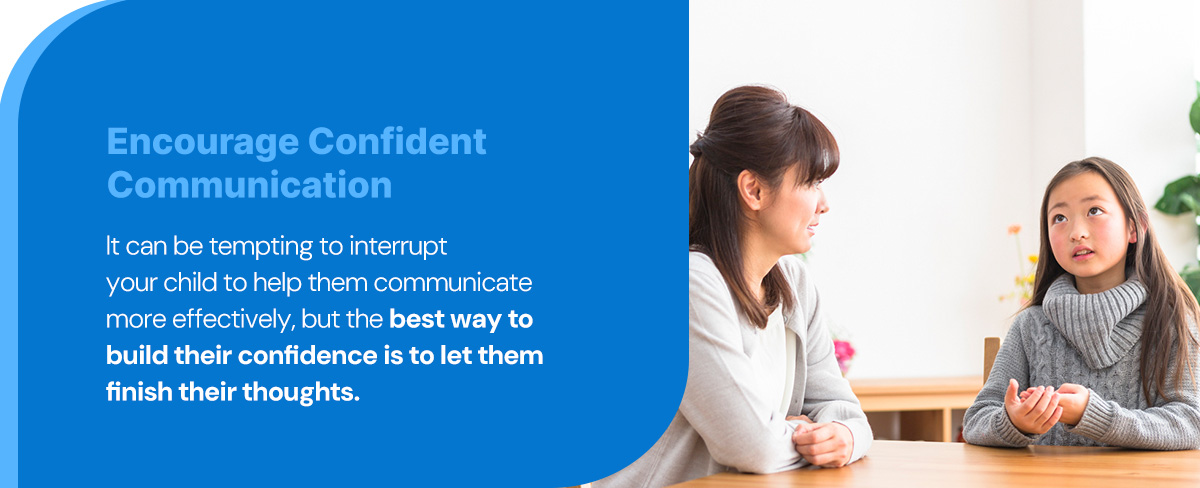
It can be tempting to interrupt your child to help them communicate more effectively, but the best way to build their confidence is to let them finish their thoughts. If they need assistance, try offering a multiple-choice question or sounding out the first letter of a word. In general, focus on making verbal interactions as pleasant as possible rather than correcting grammar or pronunciation.
Introduce Early Math as a Fun Activity
Help your child develop math skills by introducing concepts as meaningful and fun activities rather than rote memorization. While counting games are great, we also recommend activities that strengthen the language of mathematics, like asking if there are enough forks on the table for everyone at dinner.
Seek the Help of an Assessment Psychologist
If you are having trouble finding appropriate strategies or feel your child requires additional support, consider an assessment from an assessment psychologist. These crucial insights are designed not just to identify challenges, but also to illuminate your child’s unique strengths, providing a clear and comprehensive roadmap for next steps.
Once the assessment is complete, you can bring the results and recommendations to a school administrator to guide an Individualized Education Program (IEP) or other educational support. If co-occurring conditions like anxiety or depression are present, our clinicians can partner with you and your child to develop effective coping skills for greater success.
Find Support for Your Child at Bryant West Psychology
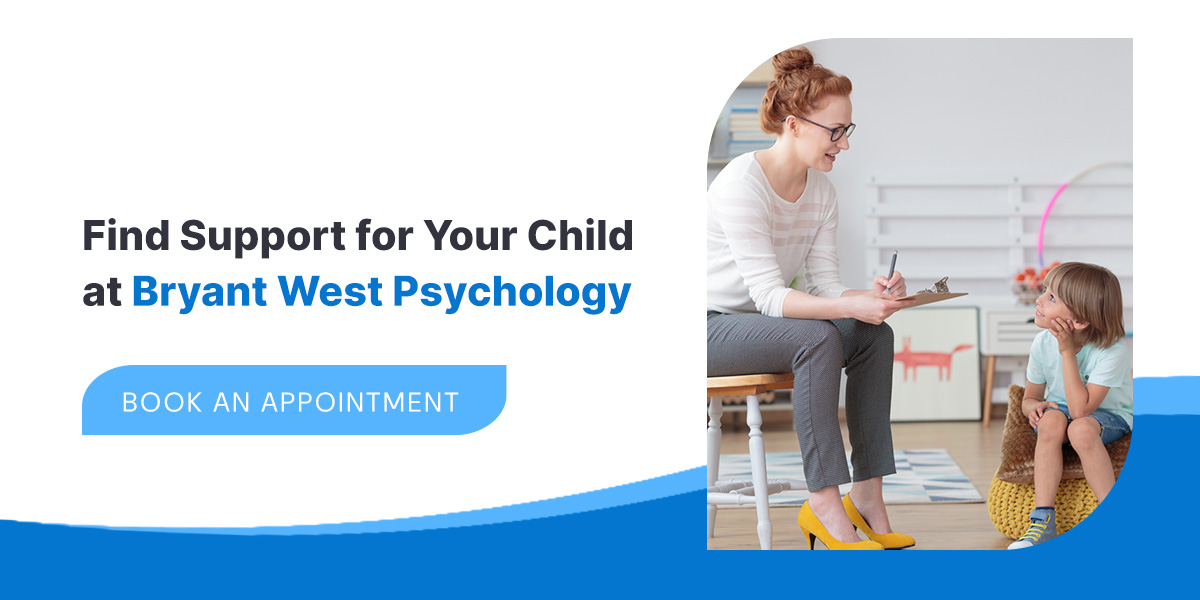
Help your child succeed in school by reaching out to our Director of Assessment Services, Dr. Stefanie Dorman who set up an assessment plan at Bryant West Psychology. We offer in-person assessments at our Midtown Manhattan location for children 2.5 years old and up. The results can then be used to support diagnostic clarification, guide treatment and assist in obtaining appropriate accommodations.
In addition, we offer both psychotherapy services and psychiatric services at our NYC office or via telehealth throughout New York State, New Jersey and other states. Our compassionate team is here to partner with you and provide clarity every step of the way. Book an appointment for your child today.